

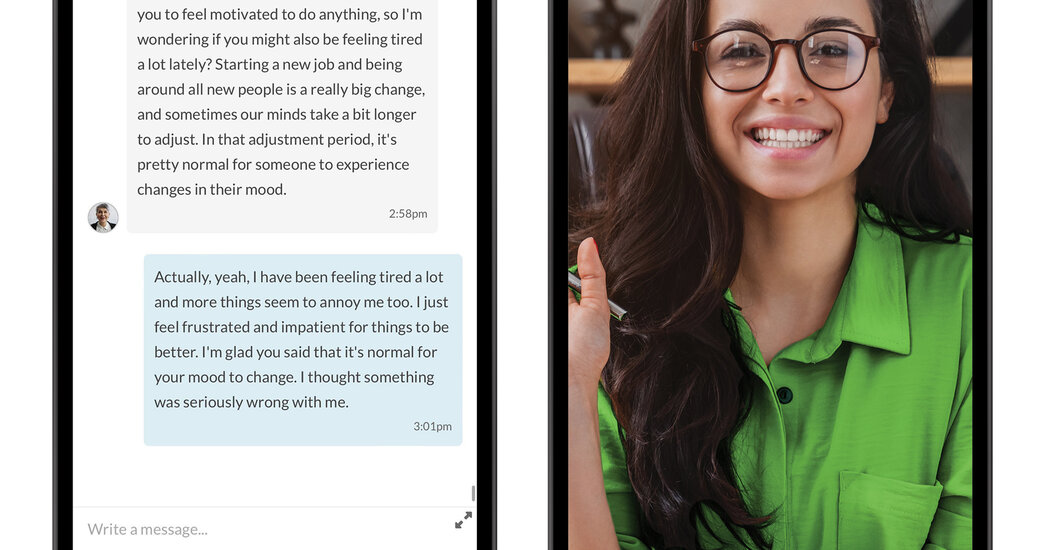
A large-scale randomized trial of texting therapy concluded that its outcomes were as good as video sessions in treating depression.
One of the most popular mental health innovations of the past decade is therapy via text message, which allows you to dip in and out of treatment in the course of a day. Say you wake up anxious before a presentation: You might text your therapist first thing in the morning to say that you can’t stop visualizing a humiliating failure.
Three hours later, her response pops up on your phone. She suggests that you label the thought — “I’m feeling nervous about my presentation” — and then try to reframe it. She tells you to take a deep breath before deciding what is true in the moment.
You read her answer between meetings. “I’m pretty sure my boss thinks I’m an idiot,” you type. The therapist responds the next morning. “What evidence do you have that she thinks that?” she asks. She tells you to write a list of the available evidence, pros and cons.
Text-based therapy has expanded swiftly over the past decade through digital mental health platforms like BetterHelp and Talkspace, which pair users with licensed therapists and offer both live chat and as-needed texting sessions. A new study published on Thursday in the journal JAMA Network Open provides early evidence that the practice is effective in treating mild to moderate depression, finding outcomes similar to those of video-based therapy.
In a clinical trial, 850 adults with mild to moderate depression were randomly assigned to two groups: One group received psychotherapy via a weekly video session; the other received unlimited, as-needed messaging or emailing with a therapist. After 12 weeks, participants in both groups reported similar improvement in depression symptoms.
“We were pleasantly surprised to see that it was as good as weekly video therapy,” said Patricia A. Areán, a former professor at the University of Washington School of Medicine and a co-author of the study, of text-based psychotherapy. “We didn’t really find any differences in the outcomes.”