

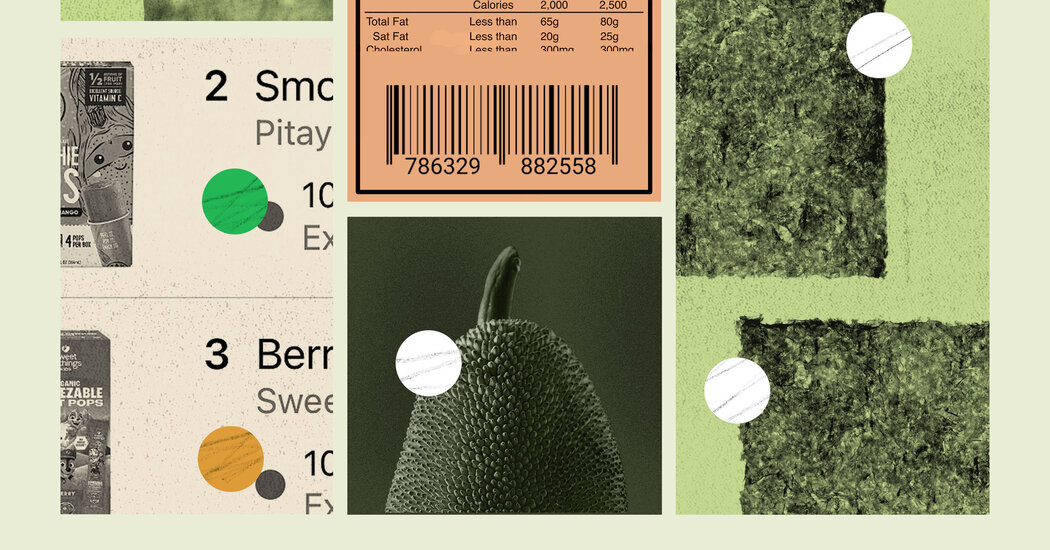
Yuka, which Kennedy has called “invaluable,” assigns health scores to food. But can it actually help people make better choices?
Cheez-Its used to be one of Marissa Gradei’s go-to snacks, in part because she thought of them as “healthier” alternatives to other savory nibbles like potato chips.
That changed three months ago, when Ms. Gradei, 27, a social media manager in Fairfax, Va., started using a smartphone app called Yuka. The app prompts users to scan the bar codes of food and personal care items — in grocery stores and at home — and then offers a score out of 100 to indicate how “healthy” it thinks the item is for you or the environment.
Ms. Gradei’s trusty snacks scored a two out of 100 — “bad” for health, according to the app. She hasn’t purchased any since.
After the Yuka app launched in the United States in 2022, more than 20 million people have downloaded it — a figure that has more than doubled since January 2024. In a recent interview with CNN, Robert F. Kennedy Jr., the U.S. health secretary, said that he and his wife “consider it invaluable.”
“You can go into any grocery store, flash it at any product, and you can get a ‘go’ or a ‘no,’” he said.
But can the Yuka app accurately portray how good a given food is for your health? And should you rely on an app to guide your food choices in the first place? We asked four nutrition experts.