

Federal layoffs and grant terminations threaten efforts to understand and preserve the nation’s past. “We are getting cut off at the knees,” said one archaeologist.
The annual conference of the 7,000-member Society for American Archaeology is one of the largest gatherings of archaeologists in North America, with more than 1,000 presentations. Normally, there is a large federal presence. But a considerable number of government archaeologists skipped last month’s get-together in Denver.
Several federal agencies abruptly pulled travel funding; researchers believe it’s because many of the conference topics touched on diversity, equity and inclusion, or D.E.I. Leading up to the conference, a dozen scheduled department meetings, including a session on climate change and cultural resource workshops, were shelved. One attendee described the revised program guide as a “two-page blood bath of federal disengagement.”
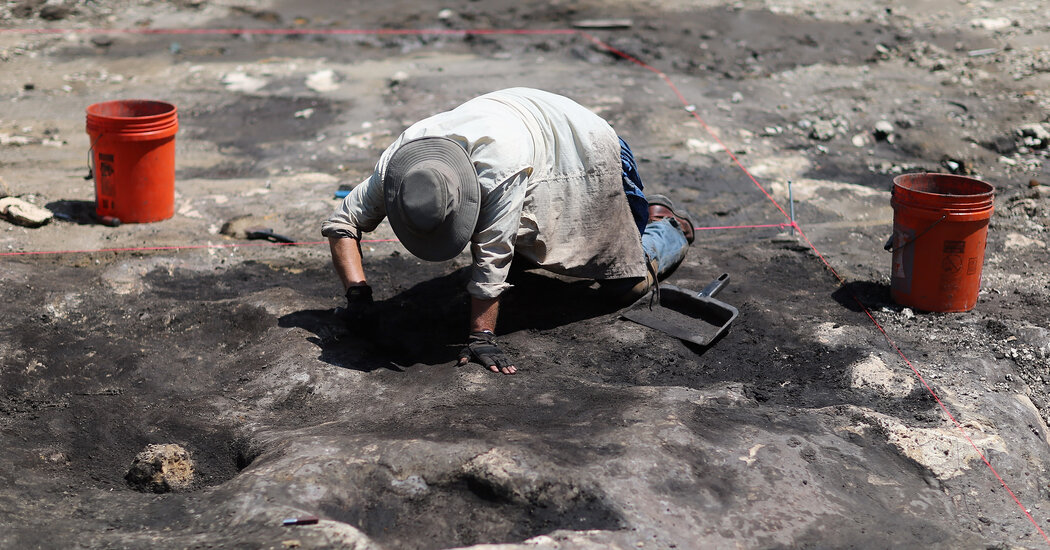
American archaeologists face a diminished, uncertain future. Over the last few months, government support for archaeological research, preservation and museums has been largely scaled back. Archaeology and cultural heritage staff have been fired, federal agencies engaged in field and collections work have been gutted, and projects have been mothballed or canceled in all three major employment sectors: academic, private and government.
Christopher D. Dore, president of the archaeology society, said the financial cost in lost potential and opportunities was incalculable. “It is ironic that on the eve of the 250th anniversary of the United States, we are choosing to sacrifice our history and the nonrenewable archaeological sites that provide that history,” he said.
Dr. Dore feared that insufficient staffing would undermine the ability to properly supervise and control public use of federal areas. Looting, visitor damage, erosion and even permitted uses such as cattle grazing are grave threats to site protection and tribal lands. “Archaeological resources are not renewable,” Dr. Dore said. “Unlike some natural resources, they don’t grow back. Once destroyed, sites and the information they hold are gone forever.”