

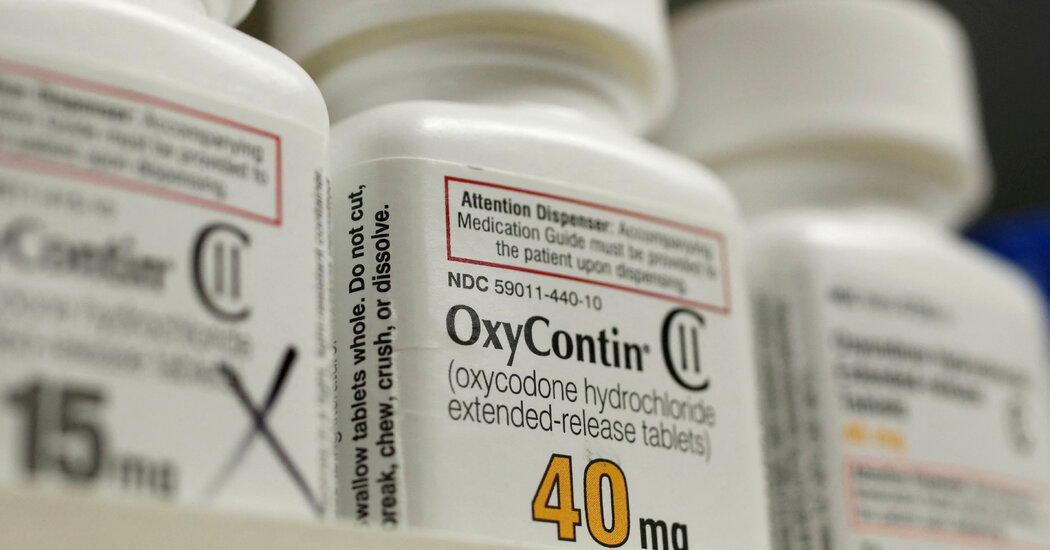
Under the plan, the company will dissolve and its owners, members of the Sackler family, will pay as much as $7 billion of their personal fortune to states, localities, tribes and others harmed in the opioid crisis.
The drugmaker Purdue Pharma, which along with its owners came to symbolize greedy indifference to surging opioid overdose deaths, will soon cease to exist, after a bankruptcy judge said Friday that he would give final approval to a plan to settle thousands of lawsuits against the company.
The agreement comes more than two decades after the first legal actions were filed against Purdue over its aggressive sales tactics and promotion of the opioid painkiller OxyContin as largely nonaddictive. It requires members of the billionaire Sackler family to relinquish ownership of the company and pay as much as $7 billion over 15 years to states, communities, tribes and others harmed in what became a decades-long national opioid addiction crisis.
“I will tell you now that I’m going to confirm the plan,” Judge Sean H. Lane of the United States Bankruptcy Court for the Southern District of New York said Friday afternoon at the conclusion of three days of testimony. He said he would issue a formal ruling on Tuesday.
Purdue will immediately contribute $900 million and then be dissolved. It will be reborn as a public benefit company called Knoa Pharma, which will manufacture limited quantities of opioid painkillers and also opioid overdose-reversal medications. Profits will go to programs to remediate the continuing devastation related to opioids.
Over the many years of the national opioid litigation, this plan, which the company says is worth $7.4 billion with potential to grow larger, represents the biggest settlement with a single pharmaceutical company. It will bring long-sought payments to states, municipalities, hospitals and school districts, plus nearly 150,000 personal injury victims and families of babies born with symptoms of opioid withdrawal. (On a separate track, the company and the Sacklers are expected to pay $175 million to federally recognized tribes.)
At a hearing Friday on the plan in bankruptcy court in Lower Manhattan, lawyers for Purdue said payments could possibly begin in March or April.