

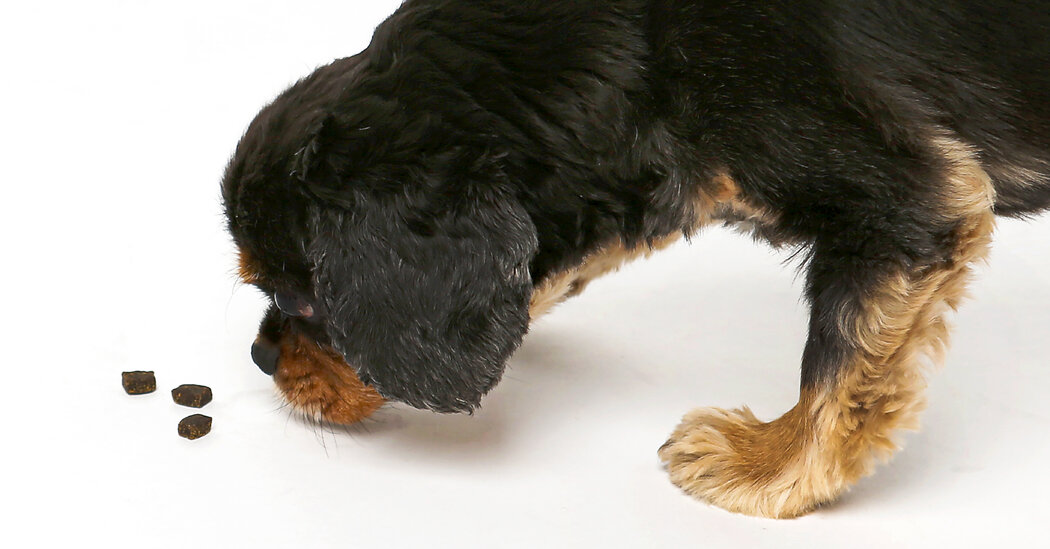
In an ideal world, Watson would have approached the treats cautiously, with a careful sniff and tentative lick. But, being a dog — with a voracious appetite and no discernible appreciation for narrative tension — he devoured them immediately. He didn’t know, or care, that they were chock-full of dried crickets and ground-up grubs.
And so what I had envisioned as a climactic taste test was over in seconds, with what was, in retrospect, an utterly predictable result: my dog would happily eat insects.
For years, some enterprising food entrepreneurs have been trying to convince people to do the same. As the global demand for protein grows, insects, they say, provide a more sustainable, ethical alternative to traditional meat. But the idea has been a tough sell. Although insects are a dietary staple in some cultures, for many people, they trigger a visceral disgust response.
But dogs? If they have a disgust reflex, I haven’t seen it. Insect entrepreneurs looking for open-minded eaters could hardly do better than good old Canis lupus familiaris.
“The dogs are not going to overthink it,” said Anne Carlson, the chief executive of Jiminy’s, which makes insect-based pet food and treats.
Hers is one of many pet food companies trying to remake meat. Earlier this year, the British company Meatly sold a limited run of dog treats made with lab-grown chicken. BioCraft Pet Nutrition, in Austria, is working to turn stem cells from mice into food for cats and dogs. And Bond Pet Foods, in the United States, is using yeast to produce animal protein through the process of fermentation.