

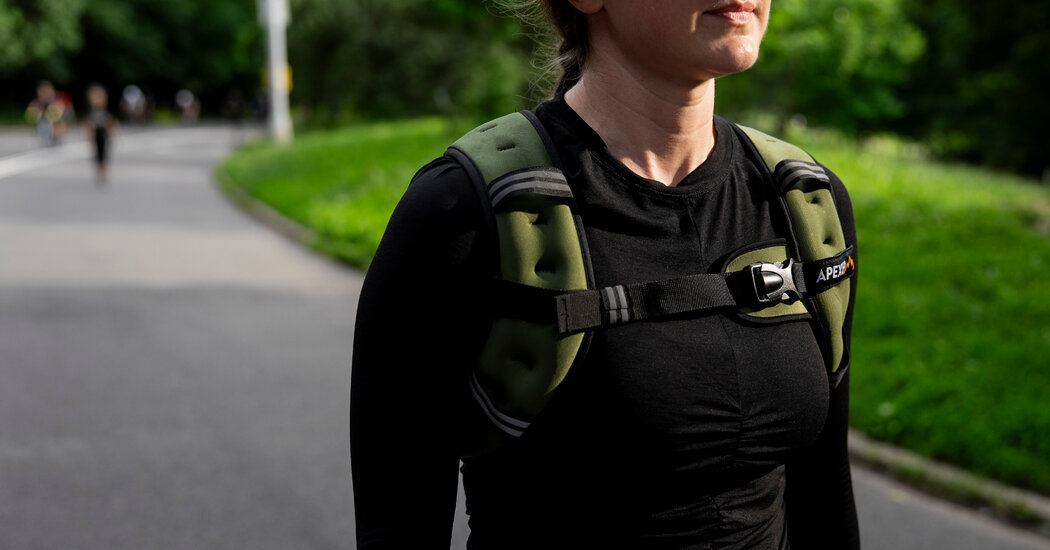
Many influencers claim the vests are an essential tool for preserving bone density and muscle mass as you age. Here’s what we know about their effectiveness.
In the past year, weighted vests have become a fixture of the fitness world. It can be hard to walk in a park or on a hiking trail without seeing someone wearing one.
Many menopause and fitness influencers — some of whom make money on commission — pitch them as a way to add some resistance to walks, squats and lunges, or even turn housework into a workout. Some claim the vests can help women in midlife maintain strong bones and muscles. One influencer recently went so far as to call them “one of the best-kept secrets” for healthy aging.
Several companies that sell weighted vests have seen recent boosts in their sales numbers, and last month, Peloton launched a series of weighted vest walks.
But how effective are weighted vests, really? We asked fitness experts and exercise scientists to explain what the research shows.
Can weighted vests improve bone health?
For women who have gone through menopause, maintaining bone health is essential for avoiding falls and moving comfortably through daily life.
Bone density plummets in the five to seven years after menopause, and half of women over 50 will break a bone because of osteoporosis. A large body of research suggests that exercise can indeed help to strengthen your bones by strategically stressing them.