

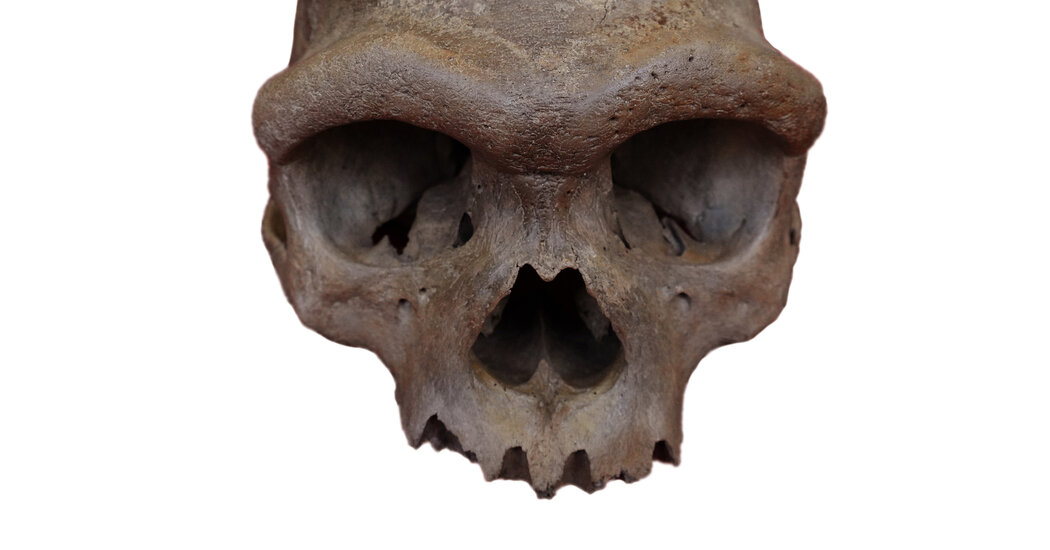
Fifteen years after the discovery of a new type of human, the Denisovan, scientists discovered its DNA in a fossilized skull. The key? Tooth plaque.
When Qiaomei Fu discovered a new kind of human 15 years ago, she had no idea what it looked like. There was only a fragment of a pinkie bone to go on.
The fossil chip, found in a Siberian cave called Denisova, looked as if it might have come from a 66,000-year-old relative of today’s humans, or maybe a Neanderthal. But Dr. Fu, then a graduate student at the Max Planck Institute for Evolutionary Anthropology in Germany, and her colleagues found DNA in the fossil that told a different story. The bone had belonged to a girl who was part of a third human lineage never seen before. They named her people the Denisovans.
In the years since, Dr. Fu has helped to discover more Denisovan DNA: in teeth and bone fragments from the Denisova cave, in the sediment of a cave floor in Tibet and even in people living today in Asia and the Pacific — evidence of interbreeding tens of thousands of years ago.
But without clues from a skeleton or a skull, the physical appearance of these humans remained a mystery, said Dr. Fu, now a geneticist at the Institute of Vertebrate Paleontology and Paleoanthropology in Beijing. “After 15 years, people want to know, who are the Denisovans?”