

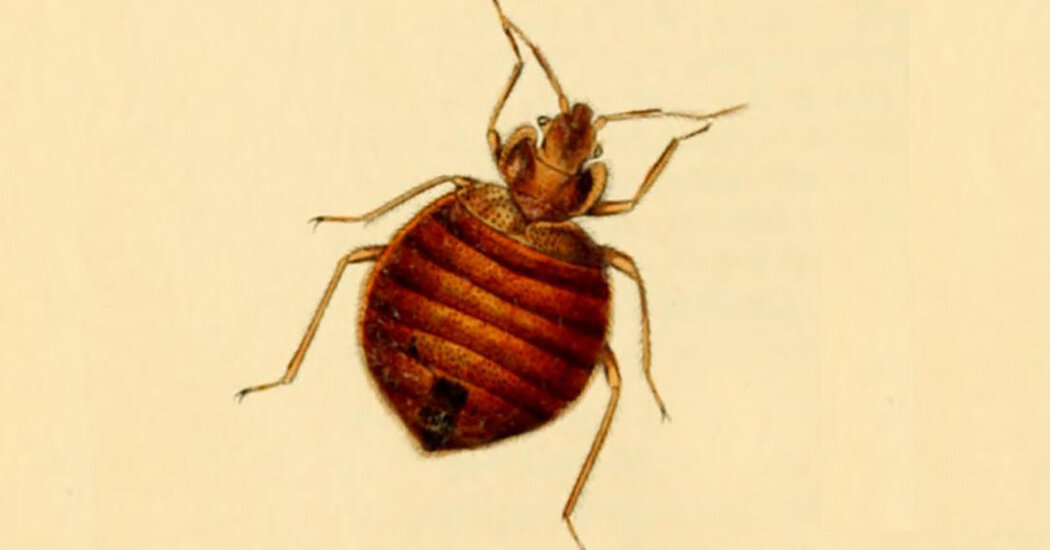
A new study suggests that bedbugs were the first urban pest, and their population thrived in that environment. For the bloodsucking insects, it’s been the perfect 13,000-year-long marriage.
When it comes to successful relationships, there’s nothing quite like the long, long marriage between bedbugs and humans, even if the affection goes in one direction.
The species of bedbug that feeds on us while we slumber is monogamous with humans; it does not shack up with any other species. Despite the ick factor, the insect does not transmit disease, nor does it cause harm beyond the mild irritation where its needlelike mouth pierces the skin.
That relationship, it turns out, has been going on for much longer than previously known.
According to a new study published in the journal Biology Letters, the bedbug’s long affair with humans began about 245,000 years ago. The insect strayed from the cave-dwelling bats that had been its sole source of sustenance and discovered the blood of a Neanderthal, or some other early human, that had bedded down in the same cave.
From that point on, scientists say, bedbugs diverged into two distinct species: one that lived off bat blood, and one that fed on humans.
“You’re not going to find a bedbug in your garden,” said Warren Booth, a professor of urban entomology at Virginia Tech and a lead author of the study. “They are completely reliant on us to spread.”
After a decline that accompanied early man’s nomadic existence, the human-dependent bedbug population began to explode about 13,000 years ago, the study found.