

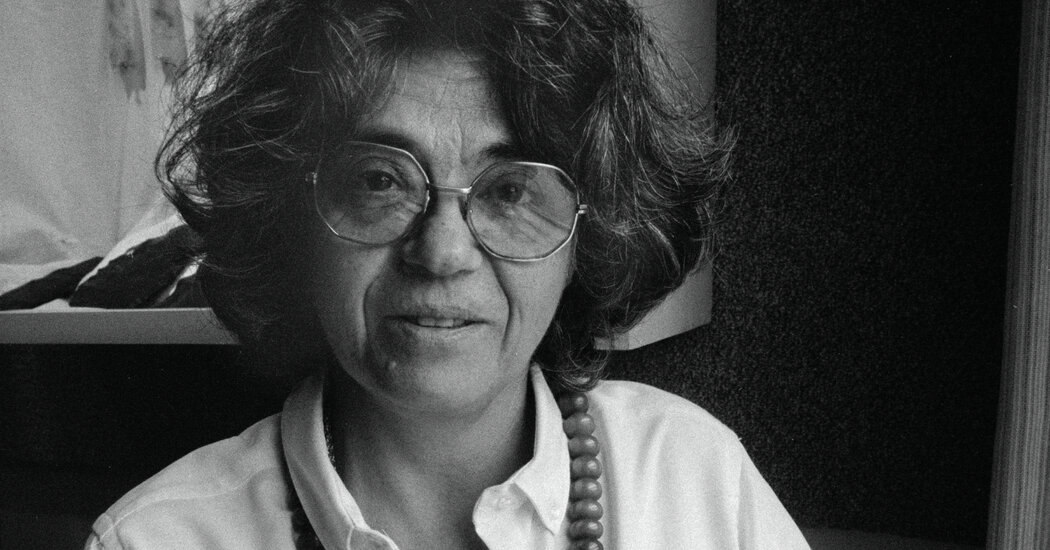
Her work in Brazil challenged the prevailing theory of when humans first arrived in the Americas and led to the development of a forgotten corner of the country.
Niede Guidon, a Brazilian archaeologist whose work called into question a longstanding theory of how the Americas were first populated by humans, and who almost single-handedly transformed a hardscrabble region of northeast Brazil into the Serra da Capivara National Park, died on Wednesday at her home near the park, in São Raimundo Nonato. She was 92.
Marian Rodrigues, the park’s director, said the cause was a heart attack.
Dr. Guidon was perhaps best known in international scientific circles for her disputed findings that human beings arrived in the Americas 30,000 years ago or more. But few questioned her accomplishments in tracking down and preserving hundreds of millennia-old rock paintings in a semiarid, cactus-studded, impoverished corner of Piauí state.
In 1979, at her insistence, the Brazilian government made the area a national park, and in 1991, again largely because of her, UNESCO, the United Nations cultural agency, declared it a World Heritage site. She then became instrumental in the creation of two museums nearby: The Museum of the American Man, which opened in 1996, and the Museum of Nature, in 2018. And she had an outsize role in attracting investment to the town, leading to a new airport and a federal university campus and to vastly improved public education in the region.
“The best way to preserve the paintings was to preserve the surroundings, and to preserve the surroundings, you had to provide resources for the people,” Antoine Lourdeau, a French archaeologist who worked with Dr. Guidon on and off for about a decade starting in 2006, said in an interview. “I don’t think most archaeologists are conscious of the social implications of their own work.”