

A millenniums-old settlement in Michigan has archaeologists rethinking the rise of agriculture on the continent.
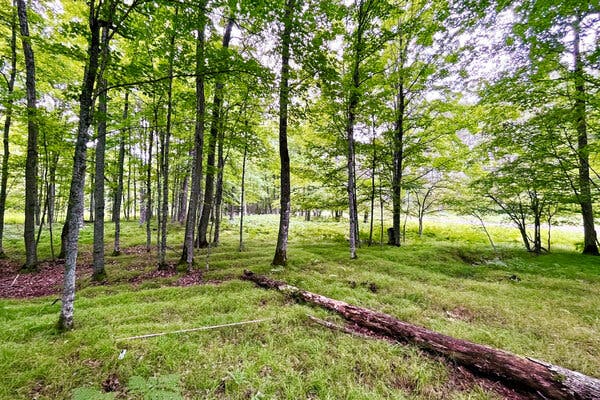
A new study has found that a thickly forested sliver of Michigan’s Upper Peninsula is the most complete ancient agricultural location in the eastern United States. The Sixty Islands archaeological site is recognized as the ancestral home of the Menominee Nation. Known to the members of the tribe as Anaem Omot (Dog’s Belly), the area is a destination of pilgrimage, where remains of the settlement date to as far back as 8,000 B.C.
Located along a two-mile stretch of the Menominee River, Sixty Islands is defined by its cold temperatures, poor soil quality and short growing season. Although the land has long been considered unsuitable for farming, an academic paper published on Thursday in the journal Science revealed that the Menominee’s forbears cultivated vast fields of corn and potentially other crops there.
“Traditionally, intensive farming in former times has been thought to be mostly limited to societies that had centralized power, large populations and a hierarchical structure, often with accumulated wealth,” said Madeleine McLeester, an environmental archaeologist at Dartmouth College and lead author of the study. “And yet until now the assumption has been that the agriculture of the Menominee community in the Sixty Islands area was small in scale, and that the society was largely egalitarian.”
The findings of the new survey indicate that from A.D. 1000 to 1600 the communities that developed and maintained the fields were seasonally mobile, visiting the area for only a portion of the year. They modified the landscape to suit their needs, by clearing forest, establishing fields and even amending the soil to make fertilizer.
“This may force scholars to rethink some ideas that are foundational to archaeological theory and to archaeology generally,” Dr. McLeester said.