

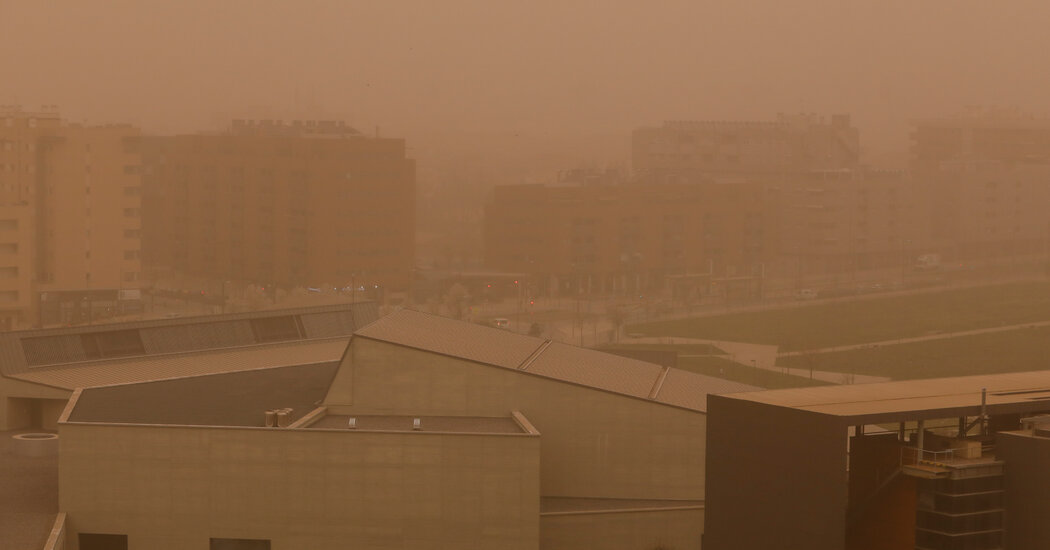
A plume of dust is affecting air quality in Florida and may reach other Southern states soon. Here’s what we know about the potential health effects.
A plume of dust that has traveled across the Atlantic Ocean from the Sahara was affecting air quality in Florida on Thursday and may reach other Southern states by the weekend.
Such events occur in the Caribbean and the Gulf Coast region several times a year, and scientists are studying how climate change may affect their frequency and intensity.
Here is what research shows about the health effects of Saharan dust exposure, and how people can protect themselves.
What is in the dust plume?
Dust plumes like this one originate in deserts, in this case, the Sahara. The dust is composed mainly of minerals found in desert sand, including silicates such as quartz.
But as they travel, plumes can pick up other pollutants, as well as bacteria, viruses and fungi. Reactions among the pollutants, and between those pollutants and sunlight, can produce additional chemicals as well.
What are the effects of exposure?
What makes Saharan dust dangerous is that its particles are extremely small, which means they can be inhaled deep into the lungs, irritating and damaging them.