

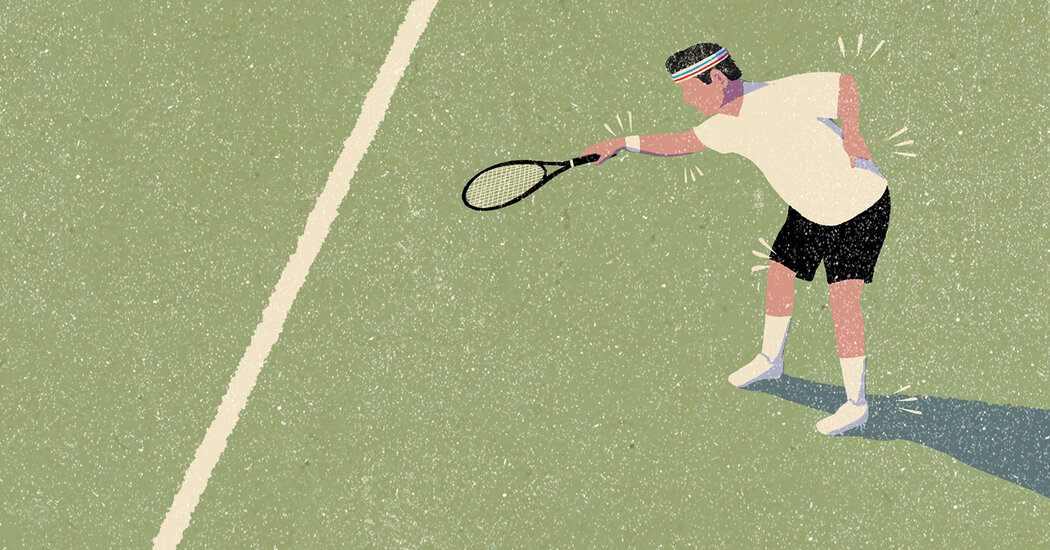
Racket sports are a great way to get a workout, but they’re not without risk. Here’s how to protect your muscles and joints.
The first game of tennis after a long break can feel like a revelation. The birds sing, the air is crisp and your serve isn’t half bad after three months off. The day after, however, is a different story.
If you took the winter off, you can expect some aches and pains when you get back onto the court. But compared with contact sports like soccer and basketball, recreational tennis poses a fairly low risk of acute injury, said Dr. Tiana Woolridge, a sports medicine physician at the Hospital for Special Surgery in New York City who has worked with collegiate players.
Even so, games like tennis and pickleball are full of repetitive and high-impact movements, such as lunging for balls and swinging the racket, and that can put a lot of stress on the body.
A five-year analysis of 449 Austrian recreational tennis players found that acute injuries spiked in the summer months, especially in June. The most common involved falls or twisted joints, especially ankle sprains, usually caused by missteps.
The spine and upper extremities are also particularly susceptible to chronic wear-and-tear injuries, said Dr. David Dines, the medical director of the Association of Tennis Professionals.
Here is an overview of the most common tennis injuries and tips on how to treat and prevent them.
Lower Back Injuries
During a serve, the back is hyperextended, and every stroke requires rotation. The damage can be subtle. In a small British study from 2007 involving competitive adolescent players, none of the 33 participants complained of back pain, but 28 of them had signs of spinal damage after M.R.I. imaging, a proportion you might expect in people over 60.