

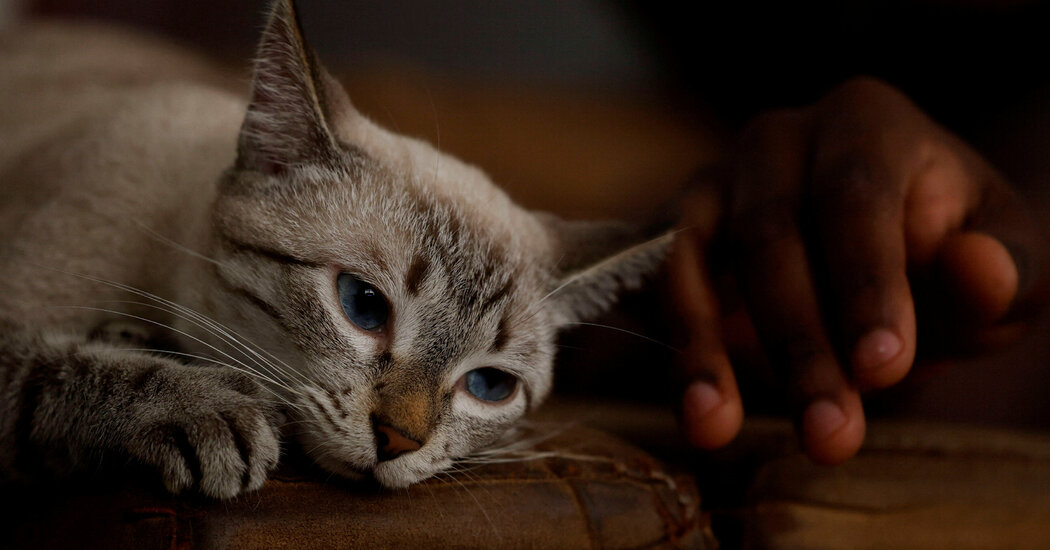
Scientists found a way to get 30 kitties to cooperate with a study exploring the power of the feline scent of smell.
For animals that are warm and fuzzy, cats have a penchant for independence or even aloofness. They tend to have their own ideas about what they should be doing, which may or may not align with the wishes of their owners.
Cats’ independent natures may be a factor in why research into their behavior has lagged behind scientific explorations into those of other domesticated animals, including dogs. “In reality, cats understand many things as well as dogs do, but they do not show it in their behavior and are more guarded, which makes it difficult to conduct experiments,” said Hidehiko Uchiyama, a professor of animal science at the Tokyo University of Agriculture.
But in a study published on Wednesday in the journal PLOS One, Dr. Uchiyama and his team managed to achieve some research findings in feline behavior, establishing that cats respond differently to the scents of their owners than to the odors of strangers. That suggests your feline friend knows what you smell like, in addition to what you look and sound like.
Through referrals from friends and colleagues, the researchers recruited 30 cats and their owners to participate in the study. The cats’ owners captured their own scents by rubbing cotton swabs behind their ears, between their toes and under their armpits. Eight additional people who don’t own pets and didn’t know the cats’ owners were recruited to be “odor donors.”
Each of the study cats, in the comfort of its own home, was then presented with an array of test tubes containing the smelly cotton swabs from its owner, a stranger and a blank control. A camera mounted to the experimental setup recorded the cats’ reactions to the test tubes.
The cats spent more time sniffing the samples from the strangers than from their owners — an indication that the cats could recognize their owners’ scents and devoted more time to exploring the ones they’d never smelled before.