

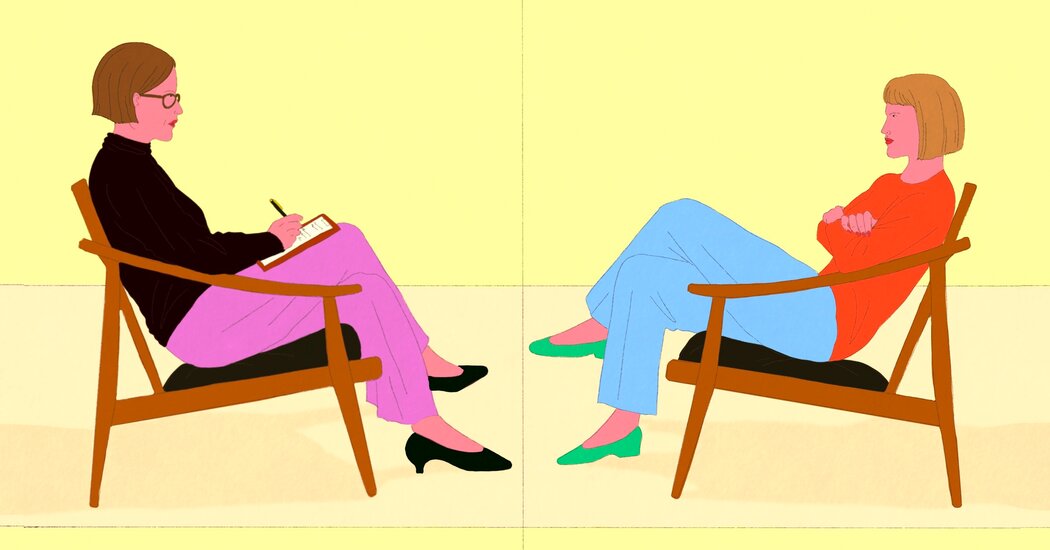
It turns out people do change, after all.
Two weeks before my father died last June, I wrote to my old psychotherapist, L.P.
We’d exchanged a few brief emails, but we hadn’t spoken in 15 years. I hoped she would be willing to see me.
L.P., who asked that I use her initials to maintain her privacy, was surprised to hear from me and suggested we meet a few times to see how it felt. Maybe she was simply treating me like a new client, but I wondered if I was being put on probation. I kept thinking about the self-absorbed 20-something who used to visit her office. I could appreciate why she might proceed with caution.
I rode the subway to our first appointment, full of questions: What was she like now? Would we still work well together? What if we didn’t?
L.P. greeted me in the reception area, and her smile quelled my anxieties. We took in the sight of each other: At 53, my hair was speckled with gray, my face a little drawn. L.P., who’s almost 20 years older than me, was impeccably dressed in summer layers, her warm brown eyes alert behind tortoiseshell glasses. I was certain she had her portrait aging in the attic.
We settled into her office and discovered we’d both developed a little hearing loss. So we leaned in closer as we chatted.
She remembered a lot, so it was a relief not to have to rehash the mishigas that came with managing my father’s health care. But I’d also withheld a lot from her when I was younger. I’d been concerned she’d judge me for some of my ill-advised choices. At the time, I’d seen her as an authority figure, the only adult in the room.