

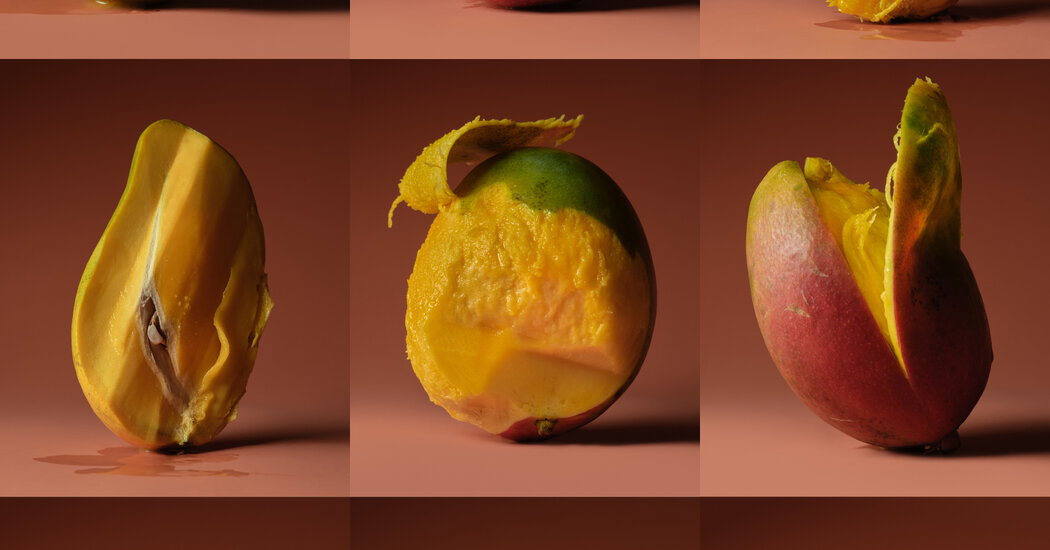
In India, the mango is known as the “king of fruits.” The fruit, and its tree and leaves, are symbols of prosperity, good luck and love.
There’s a lot to love nutritionally, too. Mangoes are rich in vitamin C and potassium. And they freeze well, making them a year-round smoothie staple.
Here’s what to know about their health attributes, along with delicious recipes from New York Times Cooking.
They’re high in sugar — but it’s not like eating a cookie.
One half of a peeled mango contains about 23 grams of sugar, which is more than twice what you get in a typical store-bought chocolate chip cookie.
But the natural sugar in mangoes doesn’t spike your blood glucose the way the added sugar in cookies does, said Jessica Higgins, a dietitian in the Lifestyle Medicine program at NYC Health + Hospitals Woodhull. That’s because your body has to break down the beneficial fiber in a mango to access the fruit’s sugar. This takes time, which gives your body a chance to gradually process the glucose. In a cookie, she said, the refined sugar is immediately available, which is why it can cause a spike.