

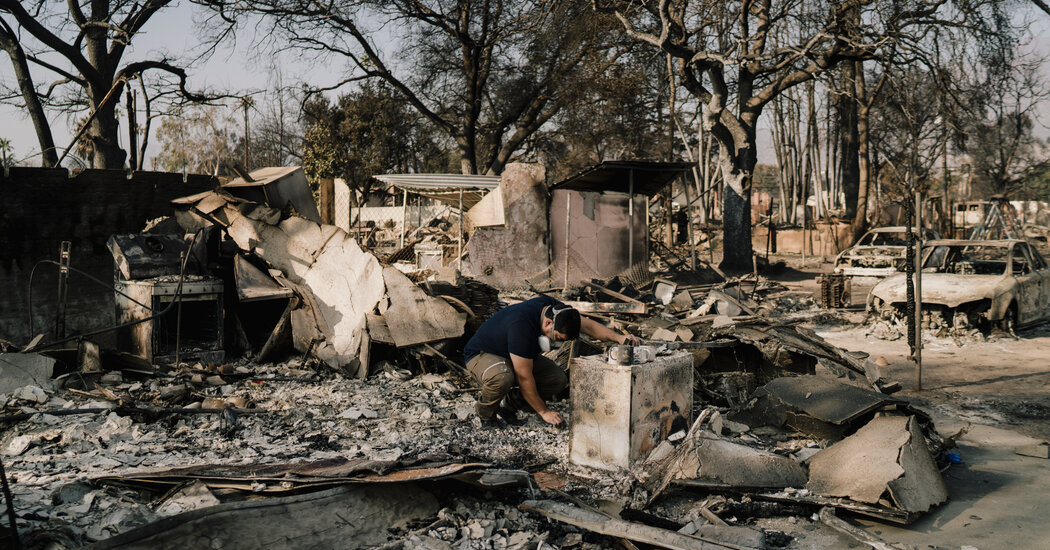
People in and around the burn zone may have been exposed to the toxic chemical through ash from the wildfires..
Jairo Perez walked out of the parking lot of God’s Waiting Room Church in Altadena, Calif., on a recent Saturday with his 9-year-old son, each with matching bandages in the crook of their elbows. They had just gotten their blood drawn to test for lead exposure.
Two months ago, the family returned to their home along the border of Pasadena and Altadena after spending several weeks displaced by the Eaton fire. While their home survived, they had to throw away potentially contaminated mattresses and furniture, remove carpeting and deep-clean the space to rid it of ash.
Now, the prospect that his son might have been exposed to toxic chemicals, like lead, is adding to Mr. Perez’s concerns.
“We love our neighborhood, we love our community, we don’t want to move,” he said. But, he added, “I’m still worrying for my child, and I’m worrying about finding a place that’s affordable if we have to move.”
Three months after the Palisades and Eaton fires tore through Los Angeles County, residents are concerned about the potential long-term health effects of the fires, which burned over 16,000 structures and all of the toxic materials they contained.
In March, the Los Angeles County Department of Public Health started hosting free mobile blood lead testing events such as the one Mr. Perez and his son attended. The department has said it is prioritizing lead testing because “it poses the most urgent and highest potential risk from the wildfires.” Those returning to their homes could be exposed to lead if they touch soil contaminated by wildfire ash, or track it into their homes. It’s also possible to inhale particles kicked up into the air when sweeping or vacuuming ash.