

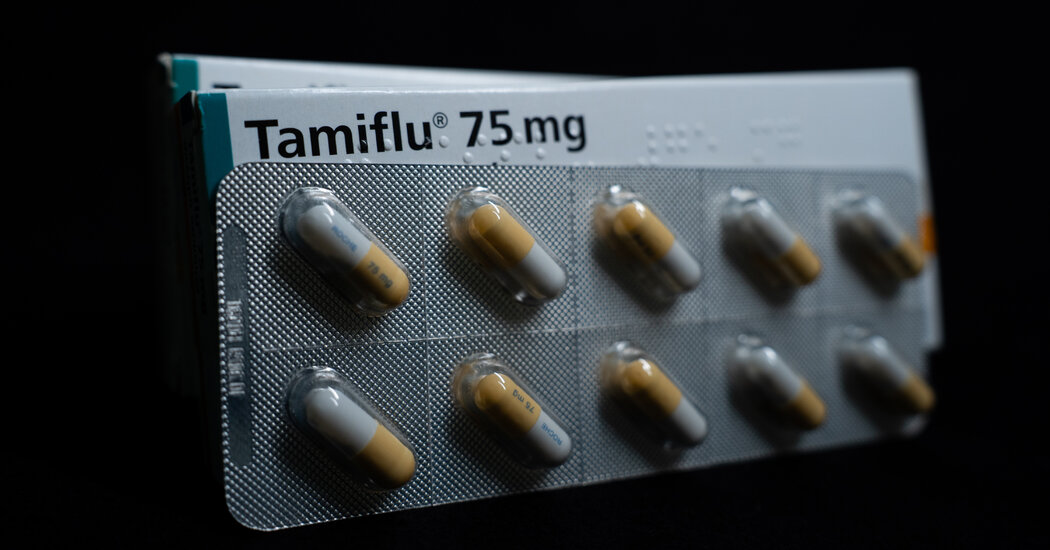
With cases of the flu on the rise, we asked experts what you need to know about an antiviral medication that can ease symptoms.
The flu is raging across the United States — and the Centers for Disease Control and Prevention expect cases will remain high over the next few weeks.
“It’s out of control,” said Dr. Sean Liu, an associate professor of infectious diseases at the Icahn School of Medicine at Mount Sinai in New York City. The C.D.C. estimates that there have been at least 12 million flu infections so far this season, leading to 160,000 hospitalizations and 6,600 deaths.
Doctors frequently prescribe Tamiflu, an antiviral medication, to people who are at high risk of becoming seriously ill from the flu. The drug can ease symptoms and help people recover a bit faster. But there’s a catch: The medication works best if people take it soon after they feel sick, and it can be tricky to decipher whether a pesky cough or sneeze is the flu or another virus.
This flu season, however, new at-home rapid tests can detect both Covid and the flu and can help you determine whether you should ask a doctor about Tamiflu. Here’s what else to know about the drug.
How does Tamiflu work?
Tamiflu works against both influenza A and influenza B viruses. The drug, which can be taken as a liquid or a pill, blocks the flu virus from spreading in the body.
“It’s not a magical medication,” said Dr. William Schaffner, an infectious disease specialist at Vanderbilt University Medical Center. “It doesn’t make you instantly better, able to leap tall buildings.” But the drug can speed up a patient’s recovery by about a day, which may not sound like much, but can get people back to work or school more quickly.