

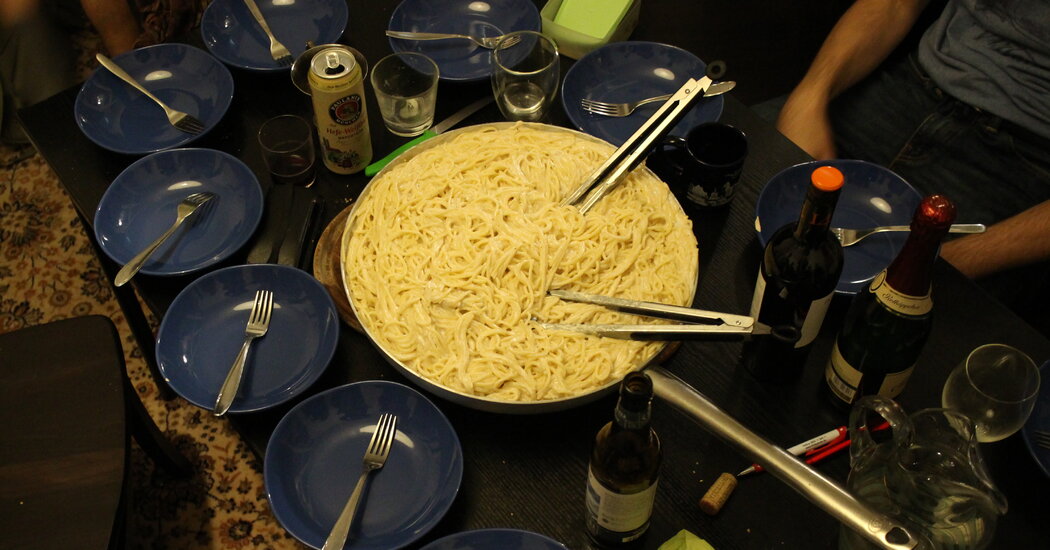
Italian scientists have drawn from thermodynamic principles to prevent a famous pasta from turning into a gooey mess.
A group of Italian physicists has dared to tinker with the traditional recipe for cacio e pepe, the challenging Roman dish consisting of pasta, pecorino cheese and black pepper. In a new study, the scientists claim to have “scientifically optimized” the recipe by adding an ingredient: cornstarch.
Cacio e pepe, which means cheese and pepper, is a showcase of Italian cuisine, with fresh ingredients producing bold flavor. The dish was supposedly invented by shepherds “who had to stuff their saddlebags with hypercaloric ingredients,” according to the new paper. Today, it is a staple at Rome’s classic pasta joints, where chefs steeped in tradition may not look kindly at scientific lessons on culinary thermodynamics.
The authors were aware they were treading on sensitive ground. “I hope that eight Italian authors is enough,” said Ivan Di Terlizzi, a statistical physicist at the Max Planck Institute for the Physics of Complex Systems in Dresden, Germany, who is originally from Puglia, Italy.
The recipe may be simple, but getting it right is anything but. The silky sauce comes together when pecorino cheese and ground peppercorns are mixed into the starch-heavy water drained from the cooked pasta. Doing so will ideally create an emulsion — a détente between substances that wouldn’t otherwise mix, as when oil and water form mayonnaise.
But as many cooks have discovered, the mixture of cheese and steaming pasta water can catastrophically result in what the researchers called the “mozzarella phase.”