

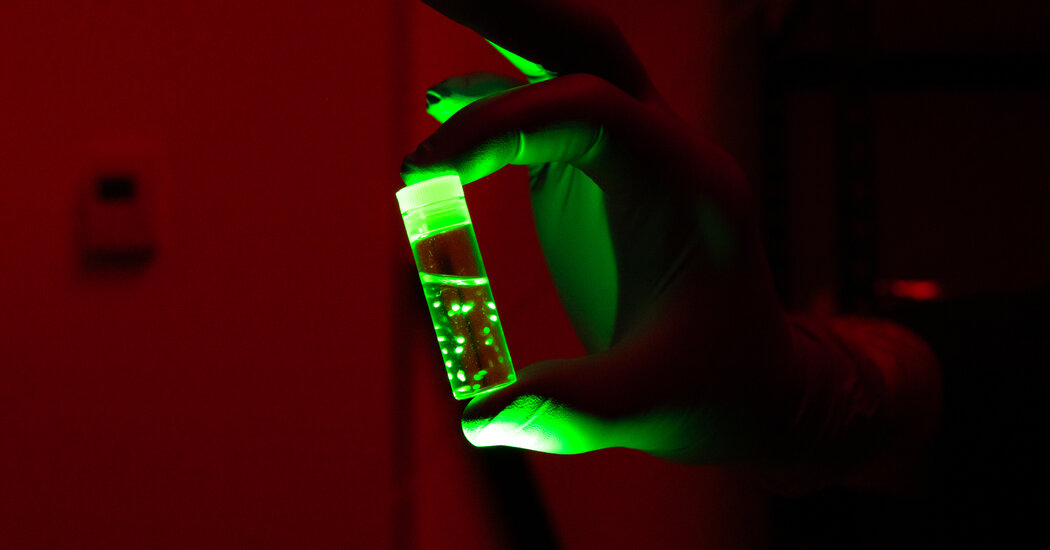
In Paola Arlotta’s lab at Harvard is a long, windowless hallway that is visited every day by one of her scientists. They go there to inspect racks of scientific muffin pans. In every cavity of every pan is a pool of pink liquid, at the bottom of which are dozens of translucent nuggets no bigger than peppercorns.
The nuggets are clusters of neurons and other cells, as many as two million, normally found in the human brain. On their daily rounds, the scientists check that the nuggets are healthy and well-fed.
“No first-year students walk in that corridor,” Dr. Arlotta said. “You have to be experienced enough to go there, because the risk is very high that you’re going to mess up the work that took years to build.”
The oldest nuggets are now seven years old. Back in 2018, Dr. Arlotta and her colleagues created them from skin cells originally donated by volunteers. A chemical cocktail transformed them into the progenitor cells normally found in the fetal human brain.
The cells multiplied into neurons and other types of brain cells. They wrapped their branches around each other and pulsed with electrical activity, much like the pulses that race around inside our heads. One such nugget can contain more neurons than the entire brain of a honeybee. But Dr. Arlotta is quick to stress that they are not brains. She and her colleagues call them brain organoids.
“It’s so important to call them organoids and not brains, because they’re no such thing,” she said. “They are reductionist replicas that can show us some things that are the same, and many others that are not.”