

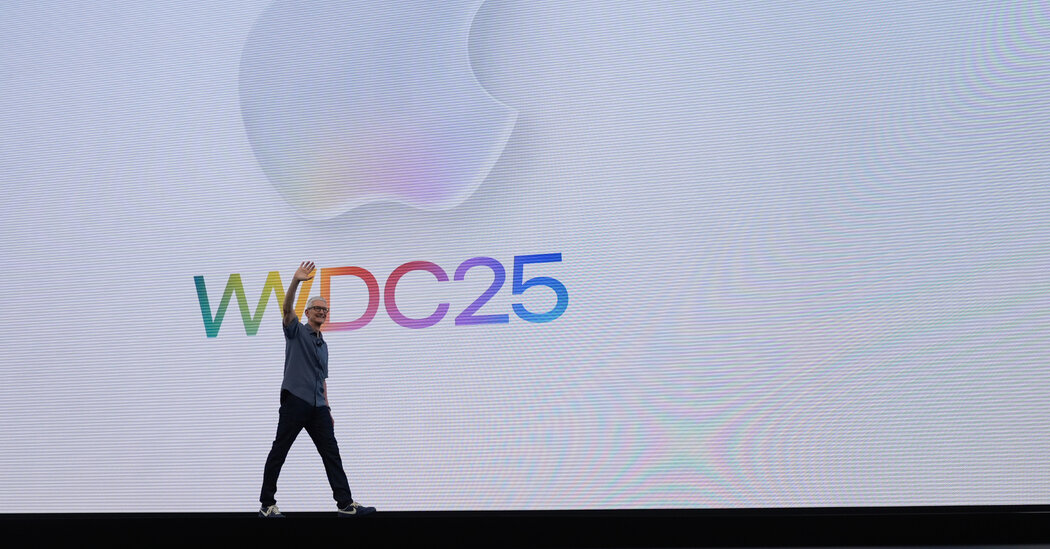
The company also introduced artificial intelligence features with its devices.
At a time when the tech industry is regularly releasing new artificial intelligence products, Apple is using more traditional technology to improve the iPhone’s appeal.
At the beginning of what is expected to be a two-hour presentation on Monday, Apple revealed a new design for its software powering iPhones, iPads and Macs that brings a transparent aesthetic to tabs, files and app icons. It will allow Safari web pages to cover an entire page and have the tab bar disappear as users scroll downward, and minimizes controls into a small circle that can be surfaced with a tap. In Apple fashion, the company calls the transparent design “liquid glass.”
The company also introduced a new naming system for its software based on the company’s fiscal year of introduction rather than the number of iterations. Instead of iOS 19, this year’s system is being called iOS 26.
The new features show how Tim Cook, Apple’s chief executive, is looking to increase sales of his company’s most important product with useful new features, even if those abilities are out of step with the industry’s zeal for everything A.I. In doing so, Apple is wagering it can be late to embrace an emerging technology but still take it mainstream before its competitors.
At its developer conference in May, Google revealed an A.I. search feature that functions like a chatbot, an update to its Gemini model and glasses with an A.I. virtual assistant. In February, Amazon unveiled an improved Alexa that uses A.I. to help book concert tickets and coordinate calendars.
Apple said its A.I. system, which it calls Apple Intelligence, will add abilities such as allowing the A.I. capabilities built into its devices available to apps. As a result, the hiking app All Trails can surface a conversational search system, allowing users, for example, to write that they’re looking for a nearby family hike that is under three miles. They can refine it by adding that they want hikes with waterfalls.