

A few years ago, most Google executives didn’t talk about A.G.I. — artificial general intelligence, the industry term for a human-level A.I. system. Even if they thought A.G.I. might be technically possible, the idea seemed so remote that it was barely worth discussing.
But this week, at Google’s annual developer conference, A.G.I. was in the air. The company announced a slate of new releases tied to Google’s Gemini A.I. models, including new features designed to let users write A.I.-generated emails, create A.I.-generated videos and songs, and chat with an A.I. bot on the flagship search engine. Google’s leaders traded guesses about when more powerful systems might arrive. And they predicted profound changes ahead, as A.I. tools become more capable and autonomous.
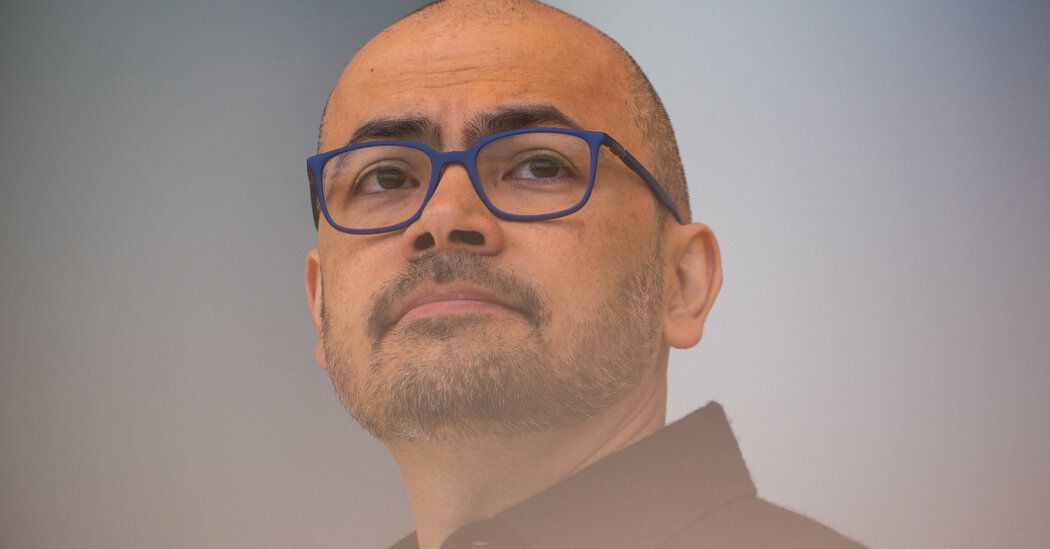
The man most responsible for making Google “A.G.I.-pilled” — industry shorthand for the way people can become gripped by the notion that A.G.I. is imminent — is Demis Hassabis.
Mr. Hassabis, the chief executive of Google DeepMind, has been dreaming of A.G.I. for years. When he joined Google in 2014 through the acquisition of DeepMind, the artificial intelligence start-up he co-founded, Mr. Hassabis was one of a handful of A.I. leaders taking the possibility of A.G.I. seriously.
Today, he is one of a growing number of tech leaders racing to build A.G.I. — as well as other A.I. products that fall short of general intelligence but are impressive in their own right. Last year, Mr. Hassabis and his Google DeepMind colleague, John M. Jumper, received the Nobel Prize in Chemistry for their work on AlphaFold, an A.I. system capable of predicting the three-dimensional structures of proteins.
This week on “Hard Fork,” we interviewed Mr. Hassabis about his views on A.G.I. and the strange futures that might follow its arrival. You can listen to our conversation by clicking the “Play” button below or by following the show on Apple, Spotify, Amazon, YouTube, iHeartRadio or wherever you get your podcasts. Or, if you prefer to read, you’ll find an edited transcript of our conversation, which begins about 23 minutes into the podcast, below.