

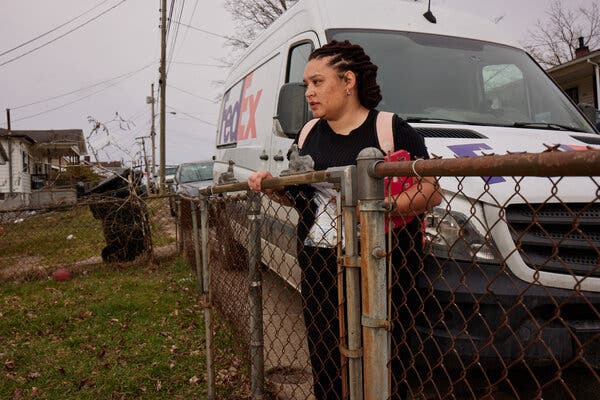
Staysha Quentrill is often called to work in the middle of the night. Occasionally, she needs to get a ride in an off-road vehicle to a mother in labor. Once this year, she oversaw a birth in an Airbnb. Ms. Quentrill catches babies in bedrooms and bathrooms, on living room floors and in inflatable birthing pools.
Listen to this article with reporter commentary
One of the few midwives attending home births in West Virginia, Ms. Quentrill has added some 30,000 miles to her car’s odometer in the last year, traveling across the state to provide care. She has attended hundreds of births, most of them uncomplicated. But even in the best of circumstances, midwifery is high-stakes work. “You’re responsible for two lives,” Ms. Quentrill, 36, said. She has seen shoulders wedged tight behind a pubic bone. With a firm rub and a few squeezes from a ventilation bag, she has resuscitated babies born not breathing, she said, their “lungs like a closed balloon.”
But for her, the job comes with additional risks.
West Virginia is one of 13 states that do not license midwives unless they are nurses, even if they have been nationally certified, as Ms. Quentrill has. With no laws around midwives who aren’t nurses and no available state licensure, Ms. Quentrill is left to operate in what she considers a “sort of legal gray area.” In other states, midwives in similar positions have faced charges of practicing medicine without a license. In Georgia, one woman was threatened with a $500 fine for each time she called herself a midwife.
Still, Ms. Quentrill believes the work is too important for her to stop. Today in West Virginia, as in a growing number of states, there is a need for people who know how to deliver babies.