

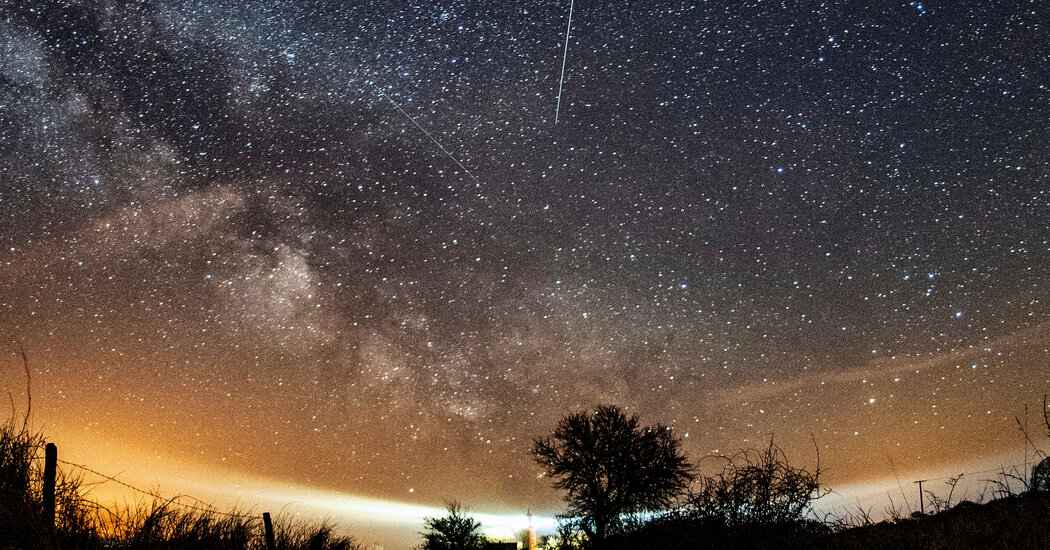
Active since last week, the shower is formed from a comet’s debris and is forecast to produce the most fireballs overnight.
Our universe might be chock-full of cosmic wonder, but you can observe only a fraction of astronomical phenomena with your naked eye. Meteor showers, natural fireworks that streak brightly across the night sky, are one of them.
The latest observable meteor shower will be the Lyrids, which has been active since April 15 and is forecast to continue until April 30. The shower reaches its peak April 21 to 22, or Monday night into Tuesday morning.
Best seen from the Northern Hemisphere, the Lyrids are caused by the dusty debris from a comet named Thatcher and spring from the constellation Lyra.
During this year’s period of peak activity, viewers may have a more difficult time seeing meteors from this shower because the moon will be 40 percent full.
To get a hint at when to watch, you can use a meter that relies on data from the Global Meteor Network showing when real-time fireball activity levels increase in the coming days.