

With a computer rendering, he helped scientists understand that the earth, with its shifting tectonic plates, is “an extraordinary living being” that is “continuously changing.”
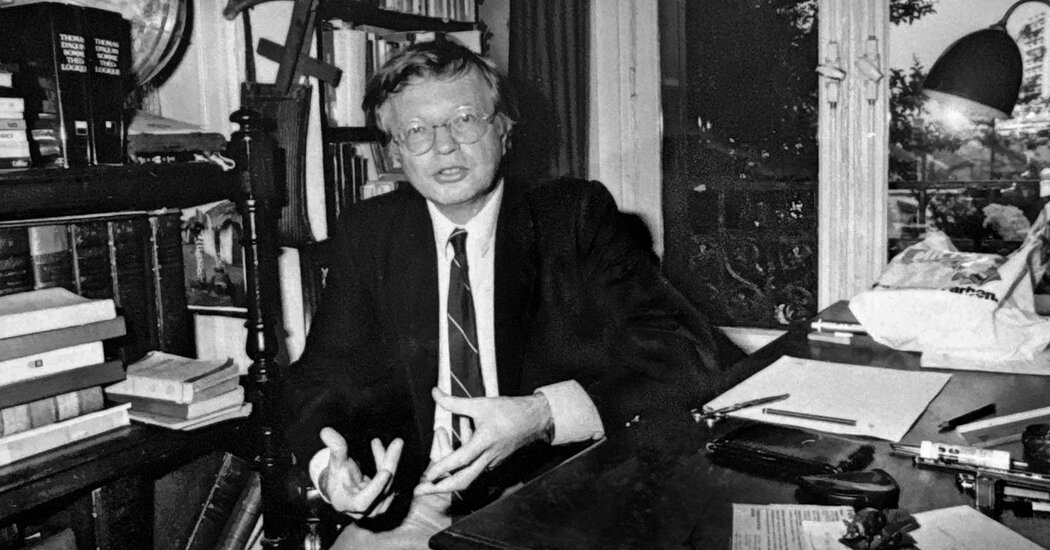
Xavier Le Pichon, a French geophysicist whose pioneering model of the earth’s tectonic plates helped revolutionize how scientists understand movements of the earth’s crust, died on March 22 at his home in Sisteron, in the south of France. He was 87.
His death was announced in a statement by the Collège de France, France’s highest educational institution, where Dr. Le Pichon was a professor emeritus and had held the chair of geodynamics.
Interned in a Japanese concentration camp as a child, Dr. Le Pichon went on to forge a second career as a deep sea explorer and for a time worked with Mother Teresa in India. But it was in the field of geodynamics that he made his greatest contribution: creating, with a computer, a model of the earth’s plates, which are constantly shifting ever so incrementally.
In his formulation there are six such plates, accounting “for what is essential in tectonic manifestations at the earth’s surface,” as he said in 2002, when he won the Balzan Prize, which is awarded in scientific fields not covered by the Nobel.
Plate tectonics, with its study of the earth’s surfaces, is the “framework” for understanding earthquakes, volcanoes and the earth’s long-term “climate stability,” said David Bercovici, a geophysicist at Yale; Dr. Le Pichon, he added, was one of the architects of that framework.
Professor Bercovici called him, in an email, “one of the giants in the plate tectonic revolution, especially in bringing the mathematical theory of it into practice as a truly predictive model of how the earth works.”