

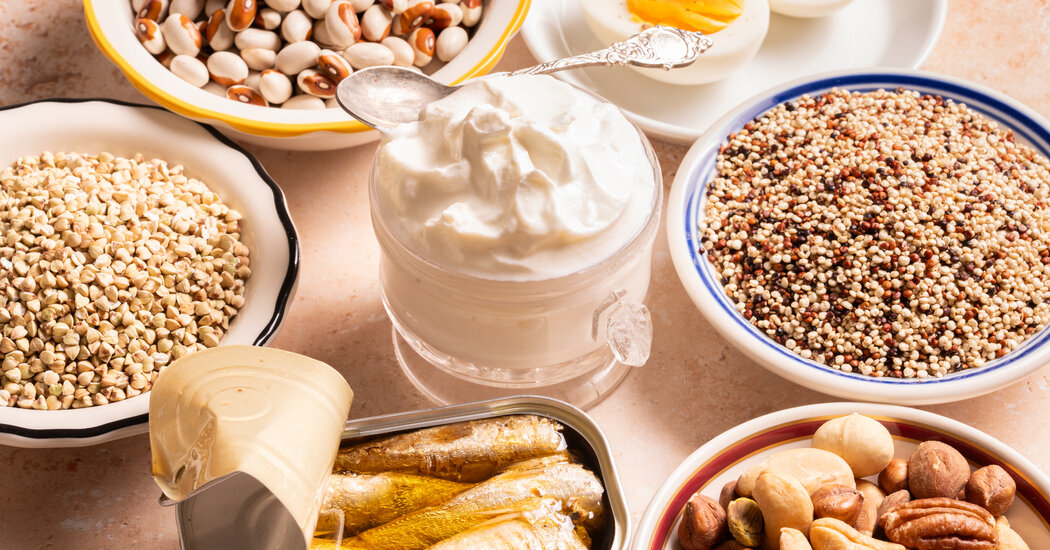
There are clear health risks associated with eating red and processed meat. Here are six alternatives.
Scientists have long known about the downsides of red and processed meats. Eating them has been linked with increased risks of health issues like heart disease, some types of cancer and earlier death. And research suggests that replacing those protein sources with nonmeat alternatives like legumes, nuts, whole grains and more can improve your health in the long run.
Such swaps can also be better for the environment — and your wallet.
“You hear the argument that eating healthy is expensive,” said Sara Elnakib, a dietitian and public health expert at Rutgers University. But you can enjoy plant-based sources of protein like beans right out of the can or ready-to-eat whole grains heated in the microwave. “It can be really easy. That’s the point: Whatever way you can get them into your system, do that,” Dr. Elnakib said.
Here are six sources of protein that aren’t red or processed meat, and the reasons experts love them.
Legumes
Beans, peas, lentils, peanuts — legumes are “affordable, nutritious and delicious,” said Julia Wolfson, an associate professor of international health at the Johns Hopkins Bloomberg School of Public Health.
Federal guidelines recommend that most people ages 19 and older get 0.36 grams of protein per pound of body weight per day (though personal needs can vary). For a 150-pound adult, this translates to 54 grams of protein per day.