

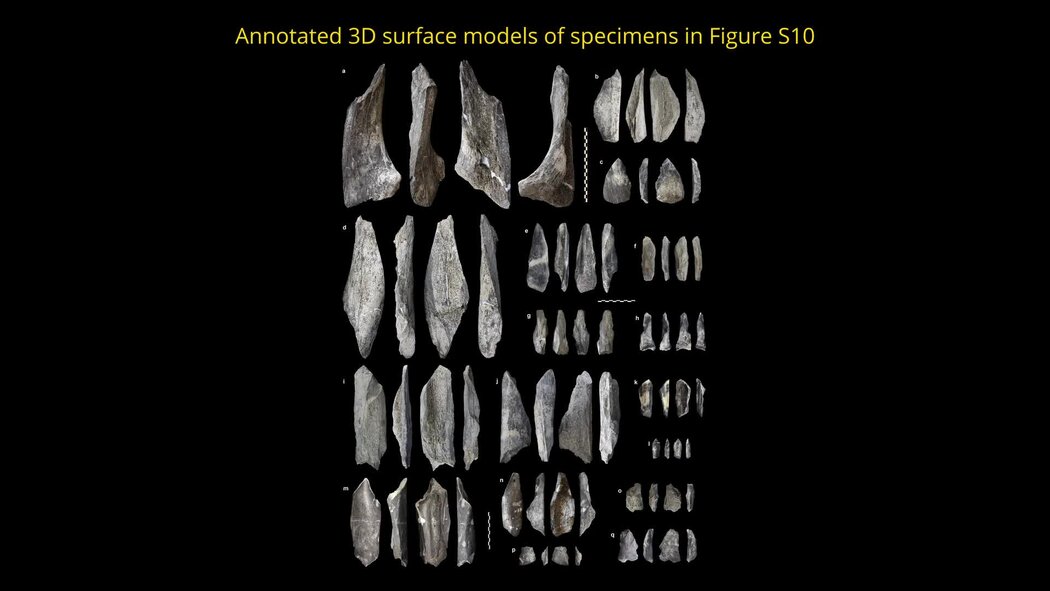
Deep in a trench in Tanzania, researchers found dozens of tools crafted from animal bones some 1.5 million years old.
Humans, unlike most other species, have a knack for making tools.
Six million years ago, our apelike ancestors probably smashed nuts with rocks or caught termites with sticks. Around 3.3 million years ago, hominins began using flakes of stone, perhaps to cut flesh from carcasses or chop plants.
And by 1.5 million years ago, they were using more sophisticated tools made of bone, according to a new study published in Nature, which dates the systematic use of bone tools to a million years earlier than archaeologists had previously thought.
Ignacio de la Torre, an archaeologist at the Spanish National Research Council who led the research, said the discovery made him wonder what is left to be discovered. “We may be missing a whole world of tools made by early humans,” he said.
Dr. de la Torre has spent years exploring Tanzania, in East Africa, to investigate the early stages of human tool-making. Before 1.8 million years ago, hominins simply knocked one rock against another to split off a sharp-edged flake. But after that point, they crafted a diverse array of stone tools.
One type, known as a hand ax, is a large, teardrop-shaped stone with a double-sided edge. Hominins also made cleavers and scrapers from bone. These tools — known as Acheulean technology — suggest that hominins gained an ability to conceptualize the shape of a complex tool and then sculpt a rock to bring it into existence.
In 2015, Dr. de la Torre and his colleagues began digging a trench in a gully known as the T69 Complex, where they had previously found Acheulean stone tools on the ground. They hoped to find more of them embedded in the rock below, perhaps alongside bones and other clues to how hominins were using those tools.