

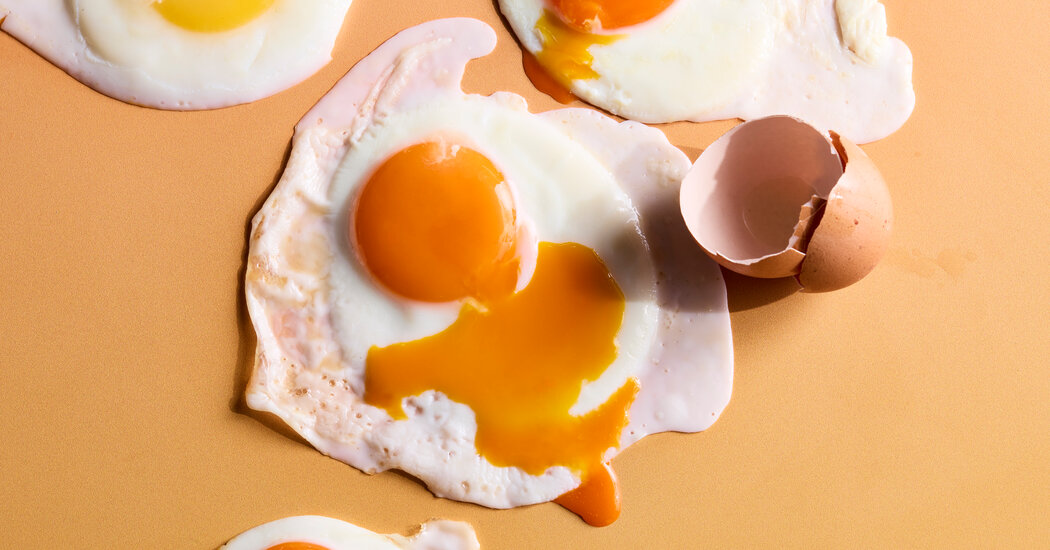
It’s hard to beat a yolk-soaked breakfast sandwich. But undercooking your eggs carries real health risks.
Sunny side-up, over easy, lightly scrambled, soft-boiled, poached: Americans love eating eggs when they’re still runny, despite the general understanding that raw or undercooked eggs aren’t good for you.
When you cook an egg, the heat that solidifies its whites and yolks kills pathogens like salmonella and bird flu. That’s why food safety officials recommend cooking eggs until both parts are firm.
But how unsafe are runny yolks really?
That depends on how much risk you’re willing to accept, said Felicia Wu, a professor of food safety, toxicology and risk assessment at Michigan State University.
“If you look at the eggs typically purchased in the United States, most of them are perfectly safe to eat in a runny state,” she said. “It’s just that we don’t know when there’s an individual egg that contains some risk.”
Salmonella is a real concern.
Eggs can carry harmful bacteria, including E. coli and campylobacter. But salmonella — the leading cause of food poisoning-related deaths nationwide — is by far the biggest hazard, said Dr. John Leong, a professor of molecular biology and microbiology at Tufts University.